TOPIC 12
Count Numbers to 100
OVERVIEW
Topic 12 concludes the development of the count sequence in Kindergarten. Your child began by counting to 5, then to 10, and then to 20. This topic focuses on learning the pattern of number names and counting to 100. Your child will count by ones and by tens, beginning from any number.
COUNT TO 100
Count Verbally to 100 Your child will learn all of the counting numbers to 100. The number names from 1 to 100 require special attention because of some irregularities. In most of the “teen” counting words, the number of ones is said or read first. But in the words for 2-digit numbers greater than or equal to 20, the number of tens is indicated first. For example, 19 is nineteen, while 39 is thirty-nine. Some of the decade words (ten, twenty, thirty, forty, etc.) are said differently from their single-digit counterparts. For example, 70 is seventy, but 30 is not threety.
Count to 100 Using Visual Clues Throughout the topic, the visual patterns on a hundred chart will help your child count to 100.
The columns show counting by tens.
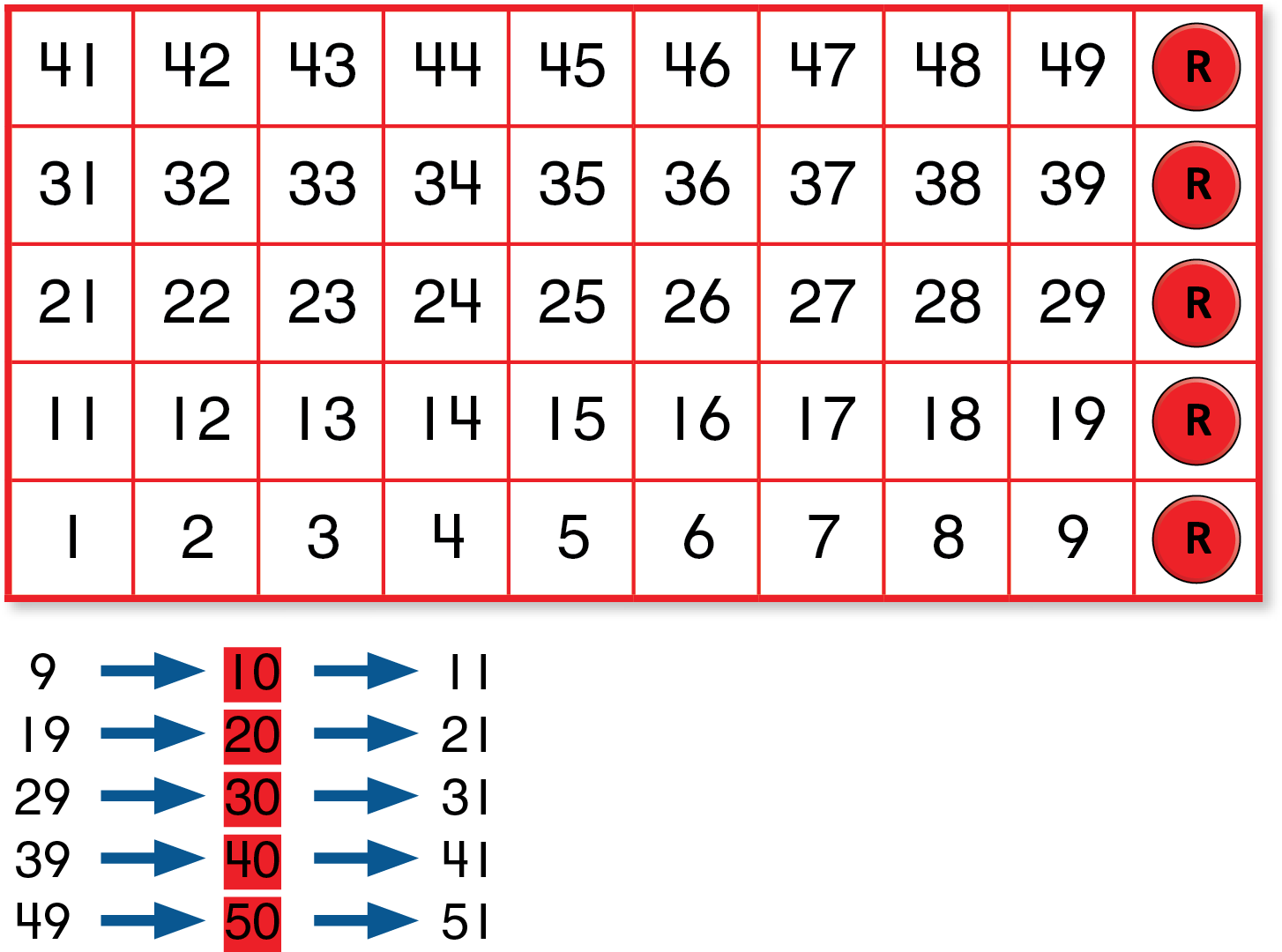 Below, numbers and arrows show counting 9, 10, 11; 19, 20, 21; 29, 30, 31; 39, 40, 41; 49, 50, 51.
The rows show counting by ones.
Below, numbers and arrows show counting 9, 10, 11; 19, 20, 21; 29, 30, 31; 39, 40, 41; 49, 50, 51.
The rows show counting by ones.
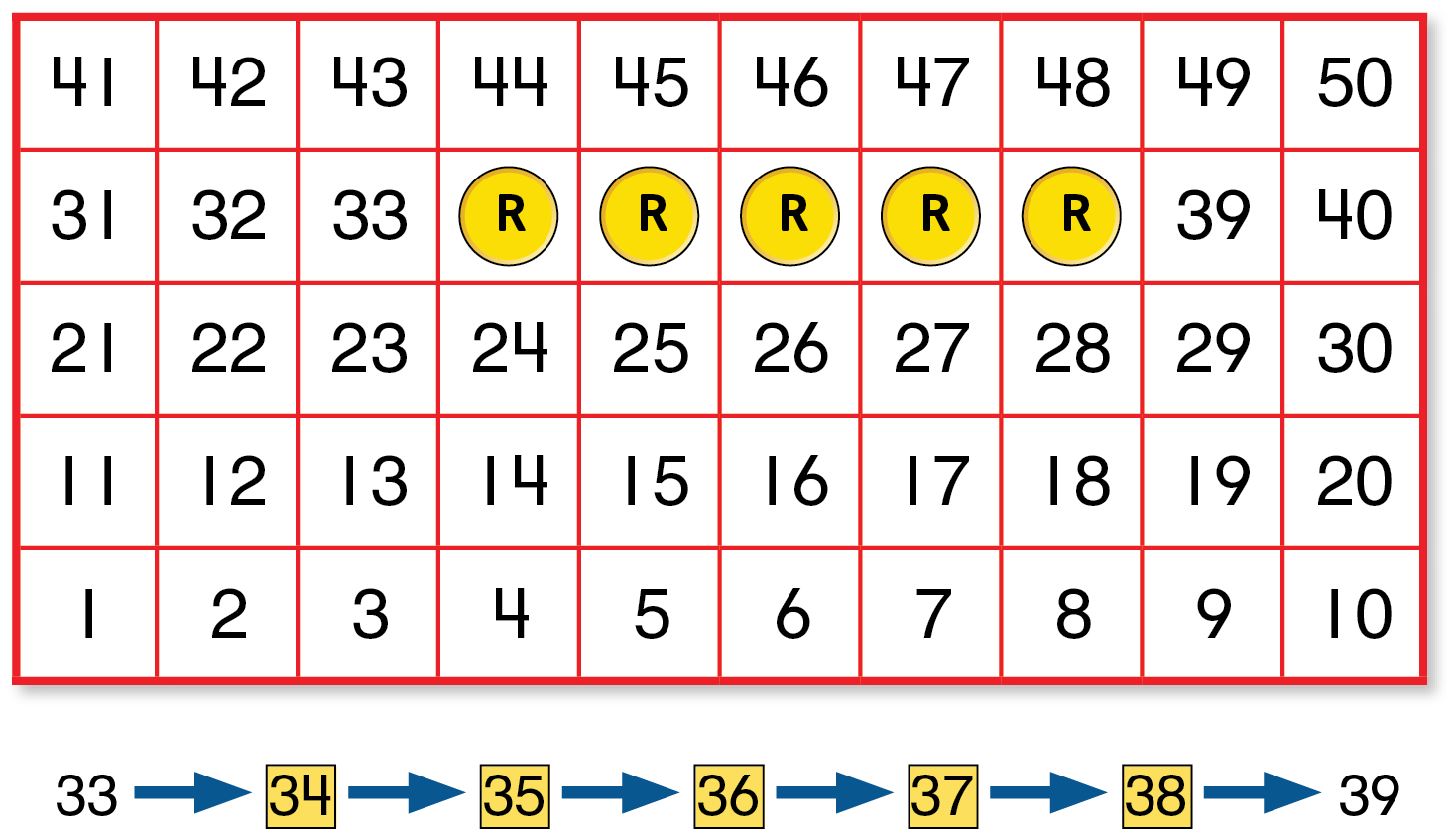 Count by Tens Your child will learn the decade numbers (10, 20, 30, etc.) and be able to count them in order, as well as find missing numbers in a pattern of decade numbers.
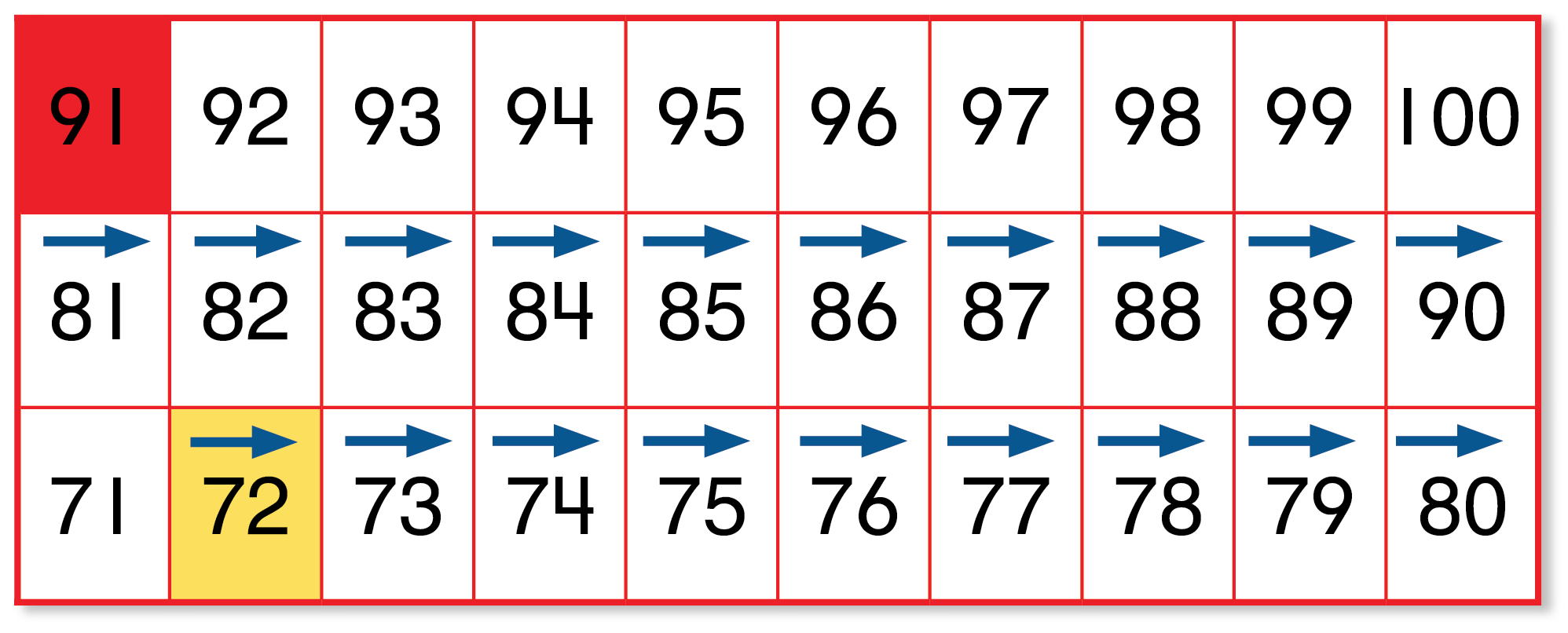
 Count Forward Beginning with Any Number Your child will practice counting forward to a target number beginning with a number other than 1. This skill is foundational for the counting on addition strategy. Your child will also count forward by tens from a given starting decade number.
This example shows how to begin counting at 72 to the target number 91.
Count Forward Beginning with Any Number Your child will practice counting forward to a target number beginning with a number other than 1. This skill is foundational for the counting on addition strategy. Your child will also count forward by tens from a given starting decade number.
This example shows how to begin counting at 72 to the target number 91.
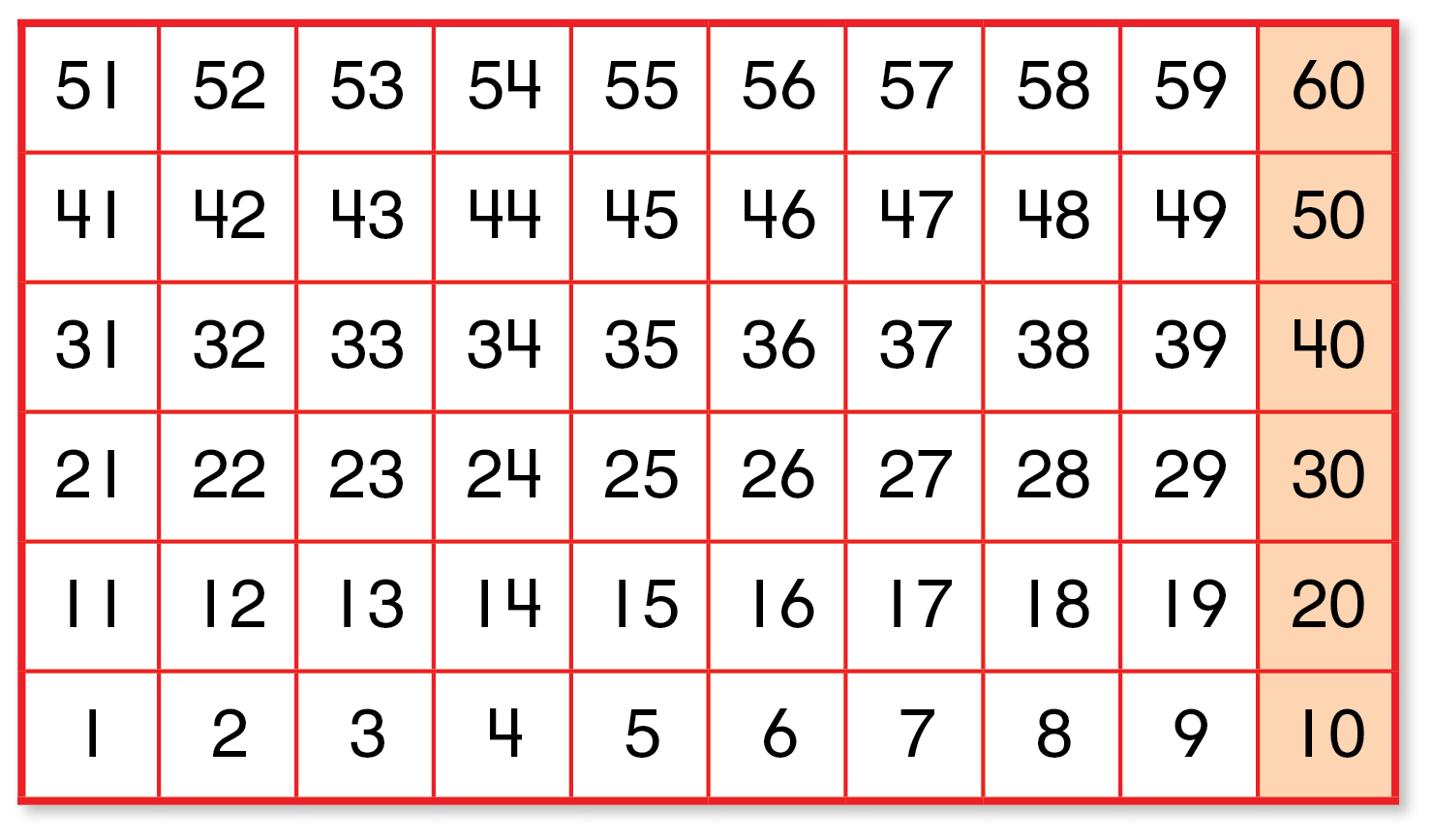
 Here is a problem that asks your child to identify the missing numbers. In this example, the missing numbers are decade numbers.
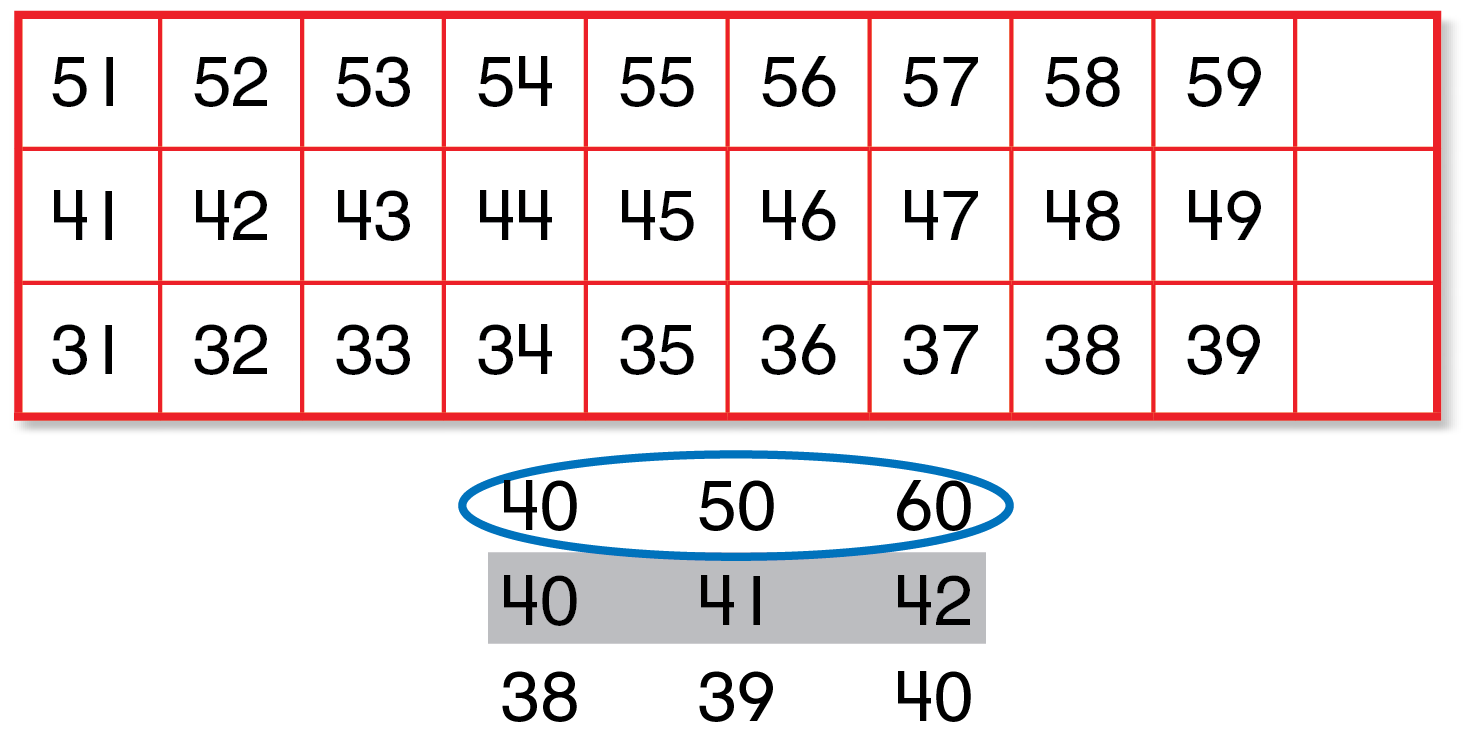 First row: Numbers 31 to 39, last box is empty. Second row: Numbers 41 to 49, last box is empty. Third row: Numbers 51 to 59, last box is empty. Below numbers 40, 50, 60 are shown. 40, 41, 42 and 38, 39, 40 are also shown. 40, 50, 60 is circled.
COUNT OBJECTS
Solve Problems Involving Counting Your child will learn that large quantities of up to 100 objects can be easily counted if the objects are put in groups of 10 and then counted by tens.
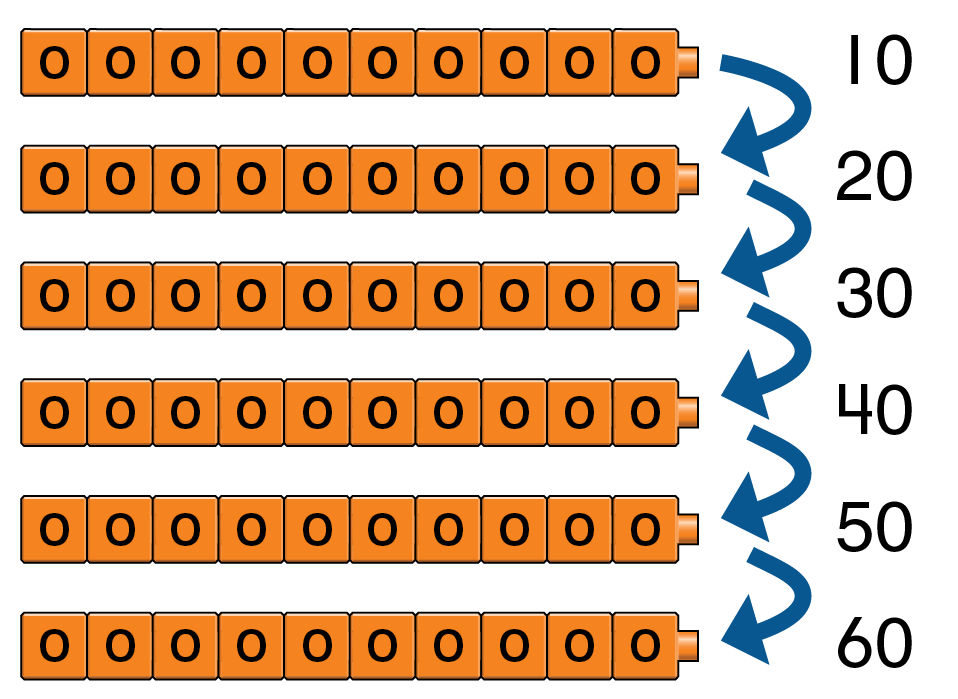 Beside the trains are the numbers 10, 20, 30, 40, 50, 60. 5 arrows skip from one train to another starting at 10 and going to 60.
CONNECT THE MATH
You can connect the math in this topic to everyday experiences. Whenever your child is doing a repetitive action that can be counted, such as swinging, walking, or stirring pancake batter, say, “Let’s count each time we swing forward by ones to 100,” or “Let’s count each step by ones starting at 25,” or “Let’s count by tens to 100.” Have your child count the pennies in a coin jar or building blocks of one color by making groups of tens.
Topic 12 Lessons
-
Lesson 12-1
-
Lesson 12-2
-
Lesson 12-3
-
Lesson 12-4
-
Lesson 12-5
-
Lesson 12-6
-
Lesson 12-7