TOPIC 9
Describe and Compare Measurable Attributes
OVERVIEW
Topic 9 introduces measurement through the idea that objects can be directly compared by length, height, capacity, or weight. Your child will learn that objects can be described by measurable attributes (such as weight or length) and that some objects can be described by more than one measurable attribute.
COMPARE TWO OBJECTS
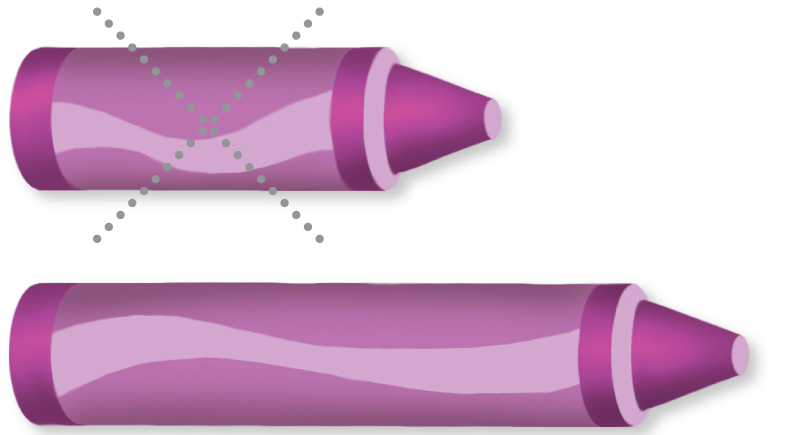
Compare by Length and Height Your child will compare the lengths or heights of two pictured objects that are lined up at one end. Then they use the terms longer, shorter, taller, the same length, or the same height to tell how the objects compare. Here is how your child would solve a problem that says, “Mark an X on the object that is shorter.”
Here is how your child would solve a problem that says, “Circle the object that is taller.”
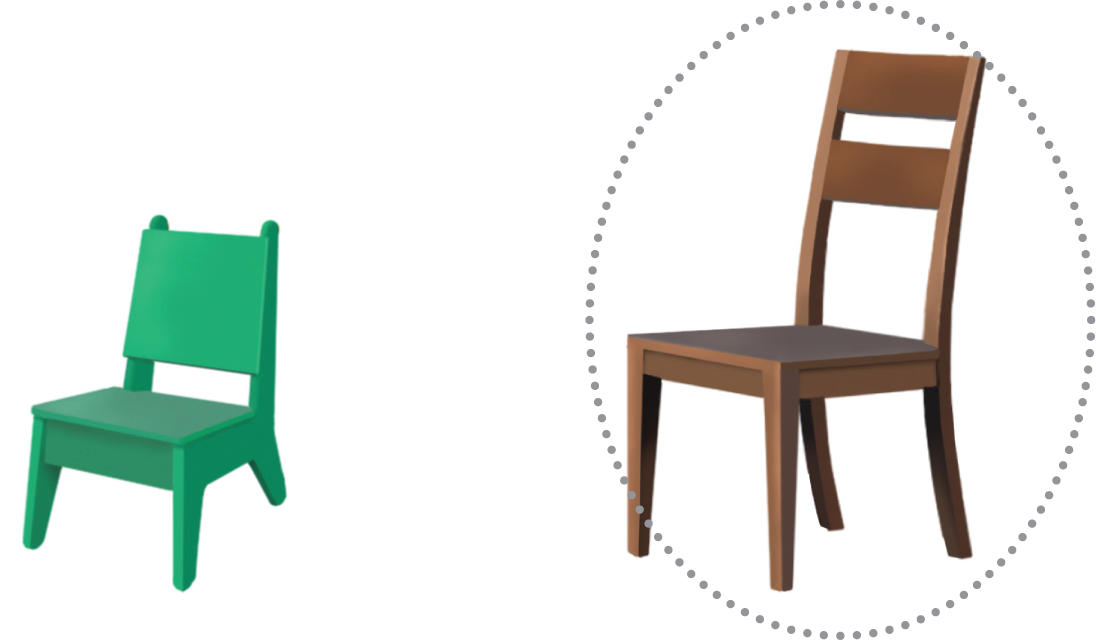 Compare by Capacity Your child will compare the capacity of two pictured containers using the terms holds more, holds less, or holds the same amount to tell how the containers compare.
Here is how your child would solve a problem that says, “Circle the cup that holds more and mark an X on the cup that holds less, or underline both cups if they hold the same amount.”
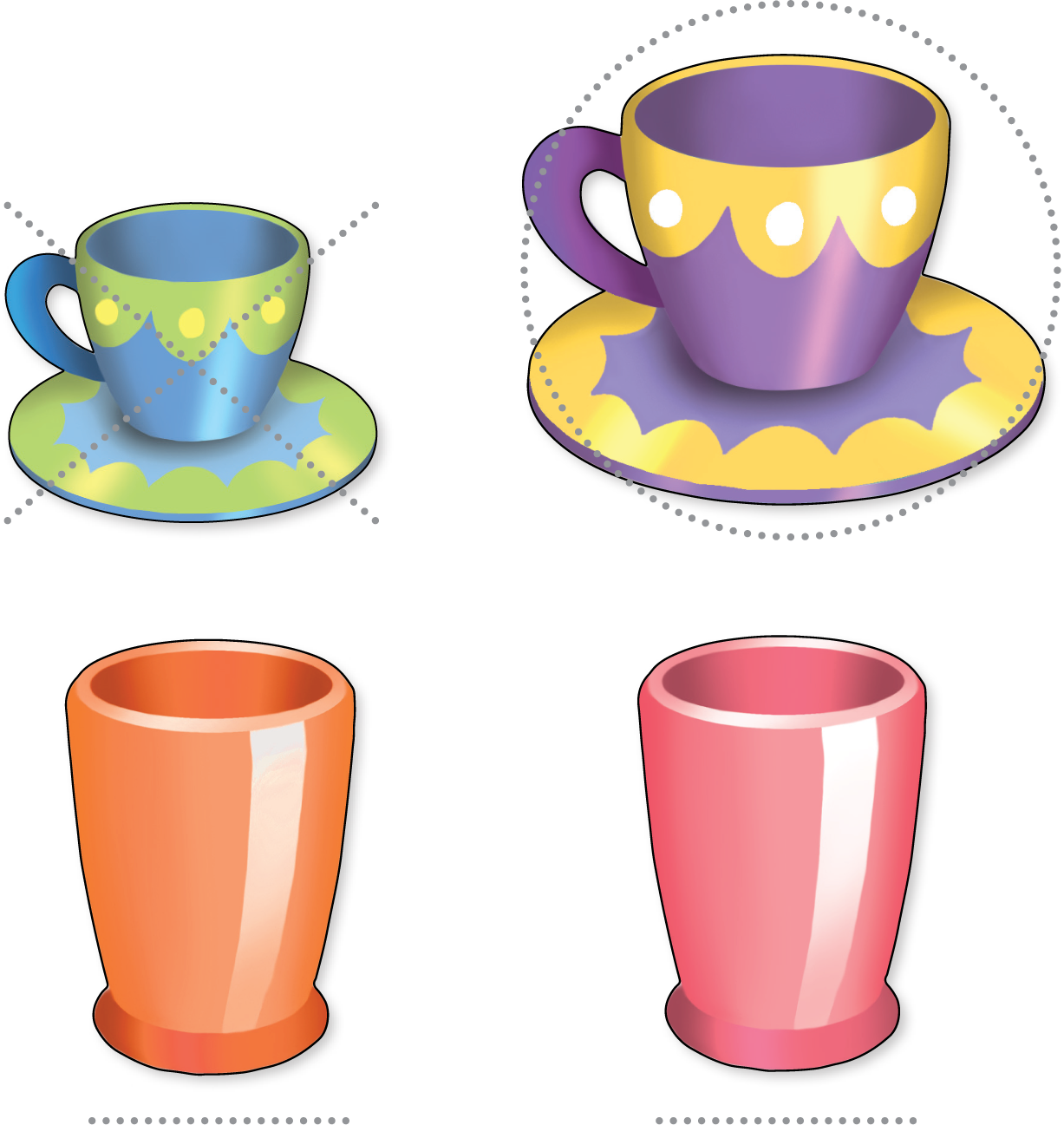 First group: 2 teacups. The one on the left is smaller. Dots prompt marking the left with an X and circling the one on the right. Second group: 2 same-size cups. Dots prompt underlines both same-size cups.
Compare by Weight Your child will compare the weights of two familiar pictured objects, record the comparison on a balance scale, and use the terms heavier, lighter, or the same weight to tell how the objects compare.
An important understanding is that the heavier object is on the lower side of the scale, and the lighter object is on the higher side of the scale. When the balance is level, the objects are the same weight.
Here is how your child would solve a problem that says, “Circle the heavier object and mark an X on the lighter object.”
First group: 2 teacups. The one on the left is smaller. Dots prompt marking the left with an X and circling the one on the right. Second group: 2 same-size cups. Dots prompt underlines both same-size cups.
Compare by Weight Your child will compare the weights of two familiar pictured objects, record the comparison on a balance scale, and use the terms heavier, lighter, or the same weight to tell how the objects compare.
An important understanding is that the heavier object is on the lower side of the scale, and the lighter object is on the higher side of the scale. When the balance is level, the objects are the same weight.
Here is how your child would solve a problem that says, “Circle the heavier object and mark an X on the lighter object.”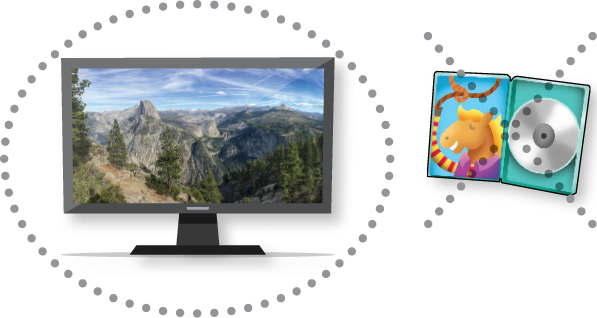
DESCRIBE MEASURABLE ATTRIBUTES
Distinguish and Describe the Length or Height, Capacity, or Weight of Objects Your child will develop an understanding of tools that can be used to measure various attributes of objects.
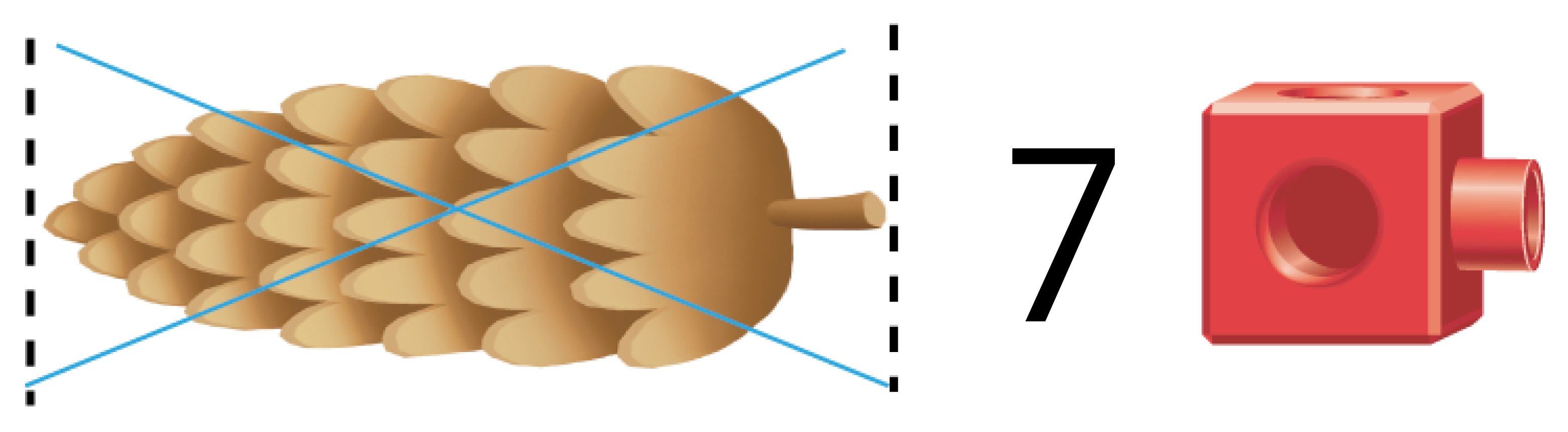
The length of an object can be compared to the length of a known object such as a connecting cube train. This is how your child would solve the problem, “Compare the length of the pinecone to the cube train and mark an X on the one that is shorter.”
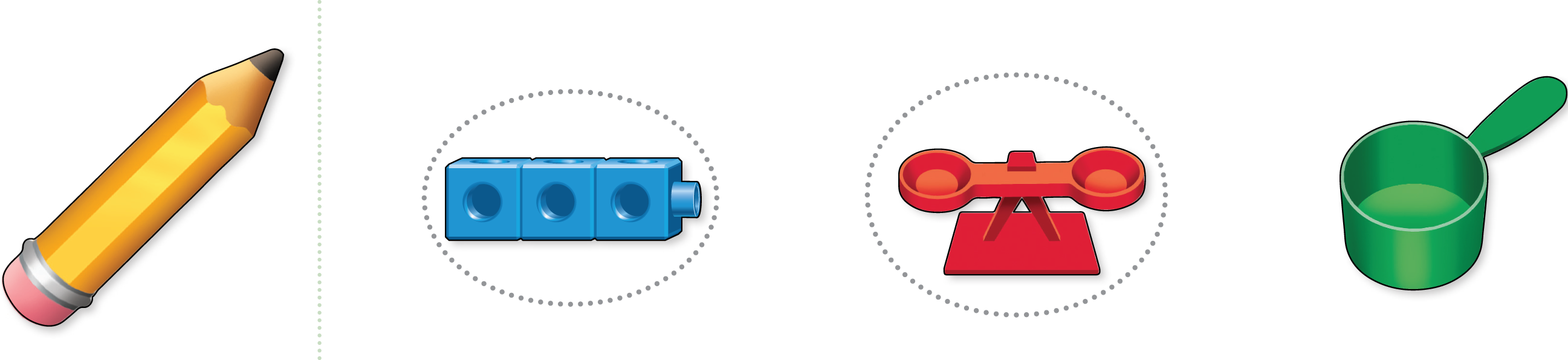
Your child will learn that some objects have only certain measurable attributes. For example, a pencil has length and weight, but not capacity.
CONNECT THE MATH
You can connect the math in this topic to everyday experiences. As you engage in daily activities, ask your child to compare pairs of objects, pets, or even people using the terms introduced in this topic. Ask, “Which is heavier, this book or this magazine? Who is taller, you or your cousin? Which holds more, this metal bowl or this glass bowl?” If the pairs are not obviously different measures, use tools such as paper clips, a measuring cup, or a balance to check your child’s guesses.
Topic 9 Lessons
-
Lesson 9-1
-
Lesson 9-2
-
Lesson 9-3
-
Lesson 9-4
-
Lesson 9-5
-
Lesson 9-6
-
Lesson 9-7