TOPIC 2
Count and Compare Numbers 0 to 10
OVERVIEW
Topic 2 continues the work your child did in Topic 1 on comparing numbers and the counting sequence with a focus on numbers 6 to 10. The topic highlights the principles that support accurate counting as well as ways to visually represent numbers of objects, including five- and ten-frames and written numerals. Your child will use the concepts of “greater than,” “less than,” “equal,” and “not equal” to compare groups of objects and numbers.
COUNT QUANTITIES 1 TO 10
Number Sequence and One-to-One Principle Your child will extend the list of counting words in order: one, two, three, four, five, six, seven, eight, nine, and ten. To count accurately, your child will learn to “tag” each object with one and only one number. Visually Picture Number Quantities 6 to 10 Your child will place objects in a five- or ten-frame to reinforce the idea that the number of objects is the same no matter how they are arranged. Five- and ten-frames foster counting on from 5 to make 6, and then from 6 to make 7, and so on.
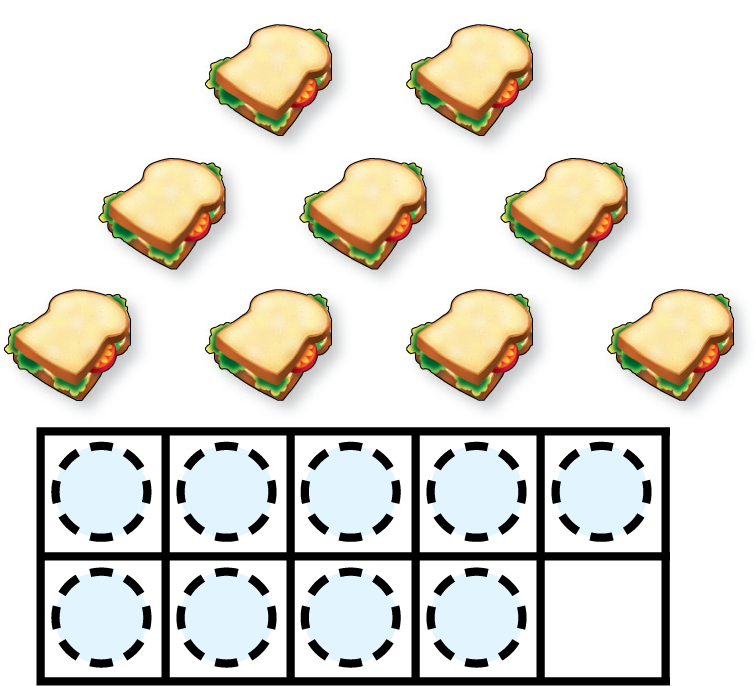
Cardinality of Groups of Objects The work in this topic reinforces the idea that the last number name said tells how many objects are in the group.
Order Numbers 1 to 10 Your child will count to find one less than a given number and one greater than a given number and then write those numerals.

NUMERALS 6 TO 10
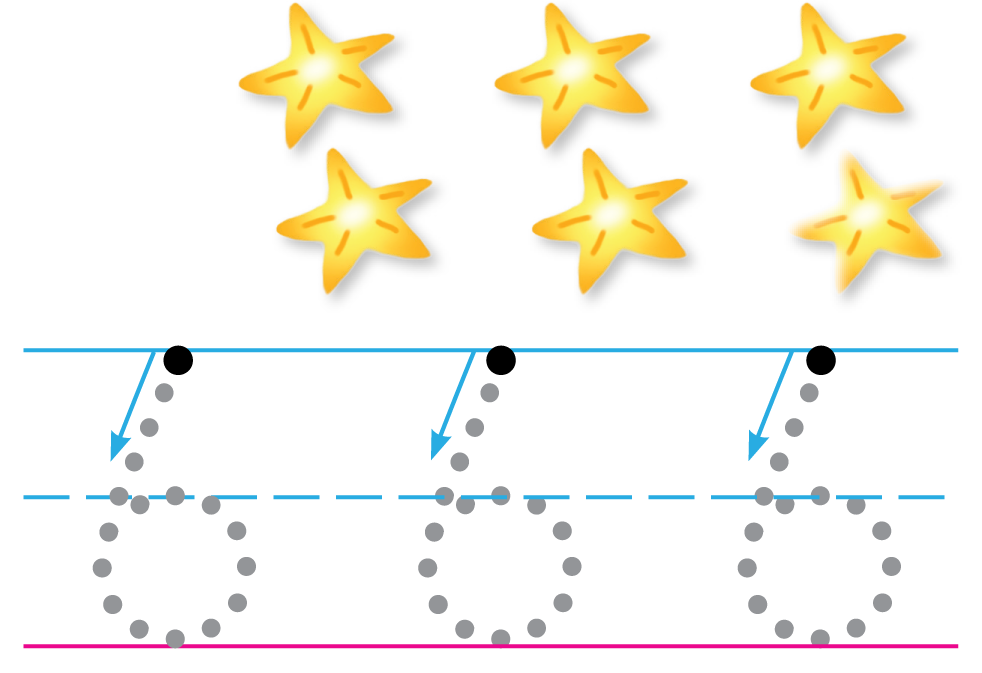
Your child will read numerals 6 to 10 and use tracing and dot prompts to write the numerals that tell how many objects they counted.
COMPARE GROUPS
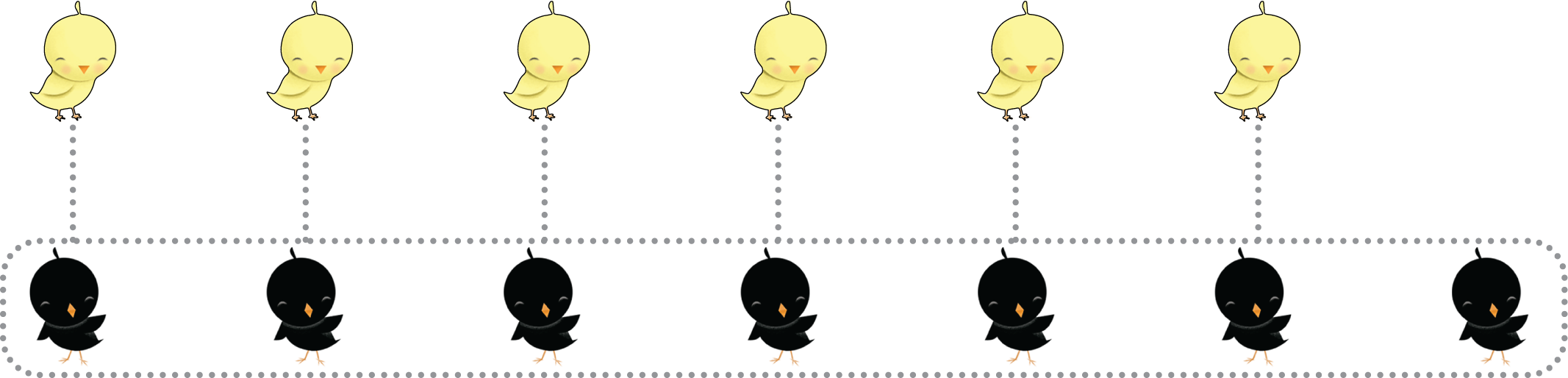
Compare Groups Your child will continue to use the matching strategy learned in Topic 1 to compare the number of objects in two groups. When one group has unmatched objects left over, that group is greater in number. Similarly, the group that does not have objects left to match is less in number than the other. Your child will build on these ideas to understand comparison situations involving “how many more” or “how many less” problems. Your child will match objects and circle the group that is greater in number than the other group.
Write and Compare Numbers Your child will count groups of objects, write the numbers that tell how many are in each group, and then determine which number is greater and which is less. Your child will also identify groups that are equal in number or not equal in number. This work develops your child’s ability to compare numbers that are not connected to a group of objects.
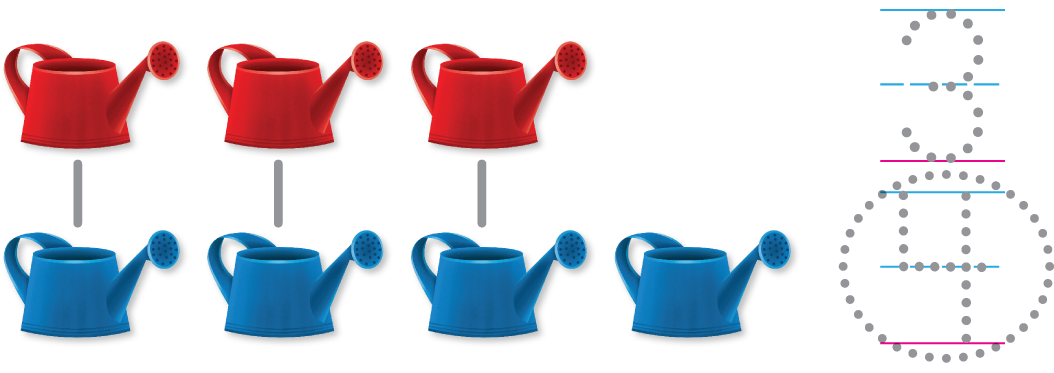 Lines match 3 watering cans in each group. Dot prompts to write the numbers 3 and 4 next to each group and to circle the 4.
COMPARE NUMBERS
Compare Numbers Your child will compare two numbers using a list of numbers from 1 to 10. They will also compare two numbers presented as written numerals. The sequence of numbers above the objects will help your child compare the numbers.
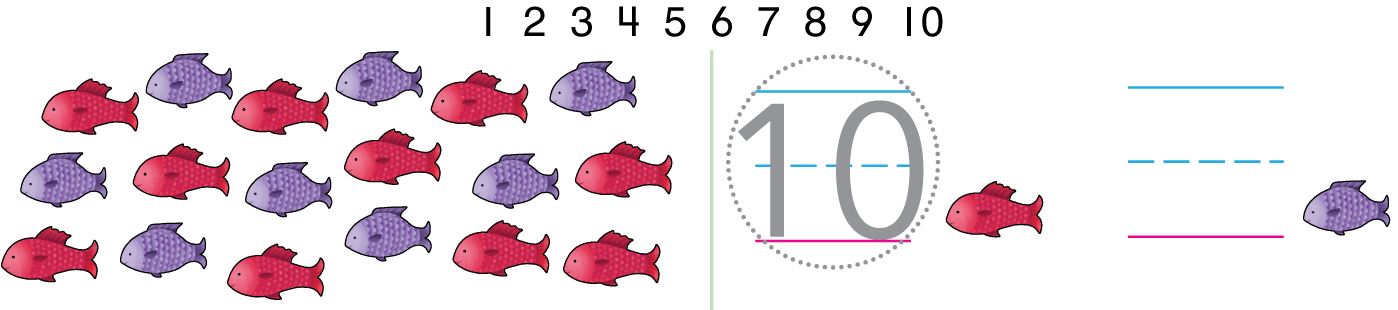 There are dot prompts to write the number 10 next to a red fish and the number 8 next to a purple fish and to circle the number 10.
Find 1 Greater Your child will count on from a known number to find 1 more. The ability to count on from any number is not only important when comparing numbers, it will also be used when your child begins to add.

CONNECT THE MATH
You can connect the math in this topic to everyday experiences. Encourage your child to accurately count and compare groups of up to 10 objects, articles of clothing, food items, etc. Have your child compare groups of objects at home or when you are out using the words “greater than,” “less than,” “equal,” and “not equal.” Ask your child to write the number of objects counted, then ask your child “one more” and “one less” questions, such as “How many buttons would there be if there were one more?” To practice writing numerals, invite your child to write the ages of friends or to write the number of each item needed on a grocery list (through 10).
Topic 2 Lessons
-
Lesson 2-1
-
Lesson 2-2
-
Lesson 2-3
-
Lesson 2-4
-
Lesson 2-5
-
Lesson 2-6
-
Lesson 2-7
-
Lesson 2-8
-
Lesson 2-9
-
Lesson 2-10
-
Lesson 2-11
-
Lesson 2-12
-
Lesson 2-13
-
Lesson 2-14