TOPIC 6
More Addition and Subtraction
OVERVIEW
In Topic 6, your child will practice both addition and subtraction within 10 and work toward building fluency within 5, increasing their ability to compute answers efficiently and accurately. Your child will also work on real-world problems in which both addends are unknown and problems in which one part of 10 is unknown.
SOLVE REAL-WORLD PROBLEMS
Your child will solve real-world problems where the sum is known but both addends are unknown. Objects, pictures, models, and equations can be used to represent and solve the problems. Your child will learn that there is more than one correct way to show a number using two addends and become familiar with equations that have the sum on the left side of the equal sign. Here is how your child might find two addends for the known sum of 7.
There are 7 flowers.

Two numbers that add to 7 are 1 and 6.

A sum of 7 can be modeled with cubes and an equation.. 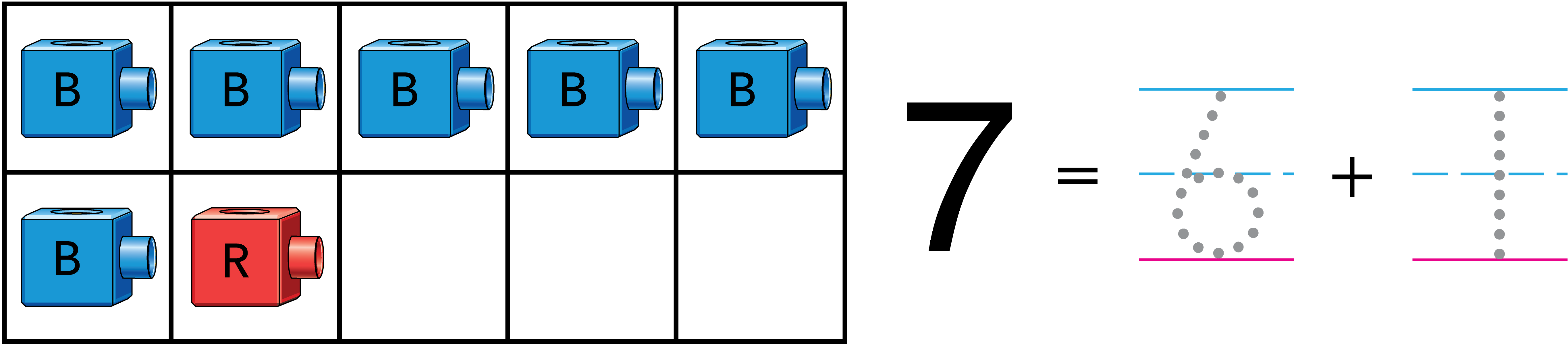
ADD AND SUBTRACT
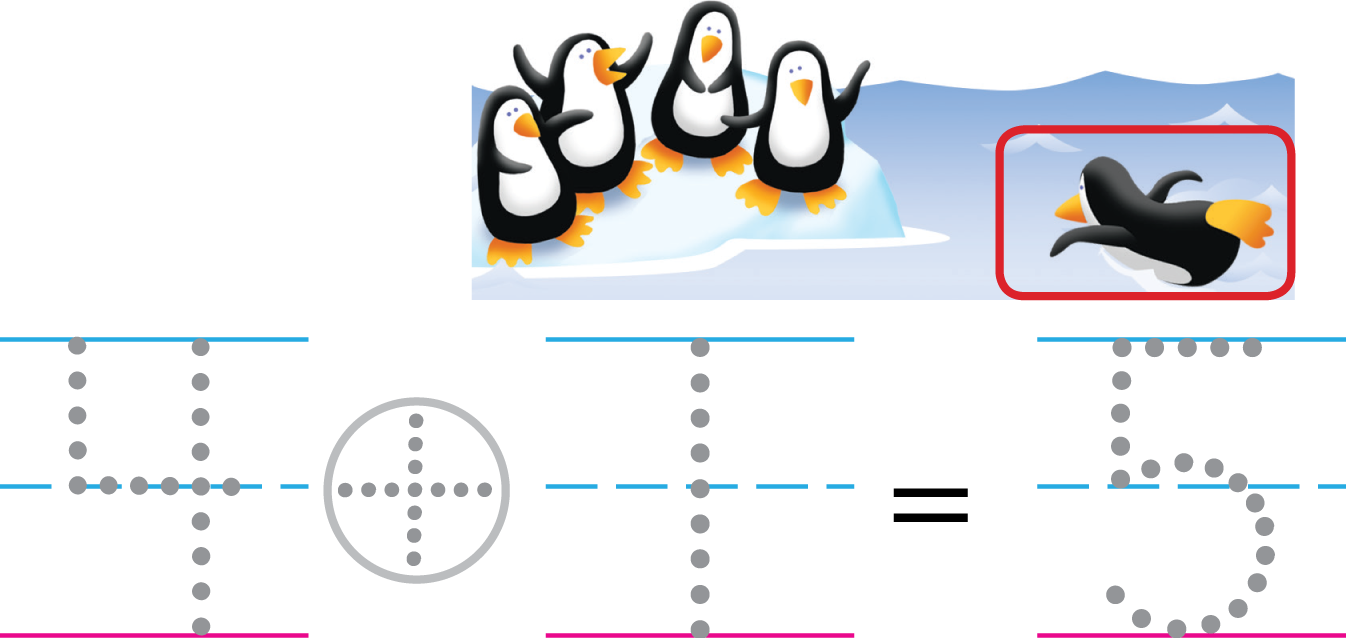
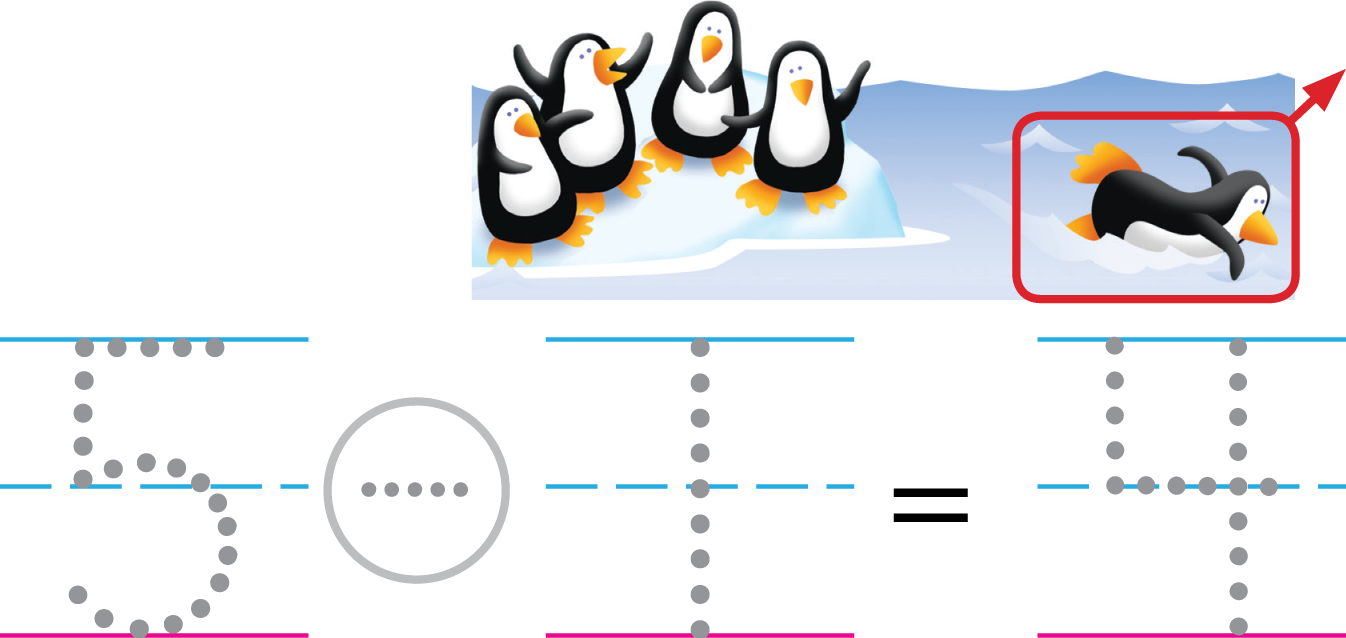
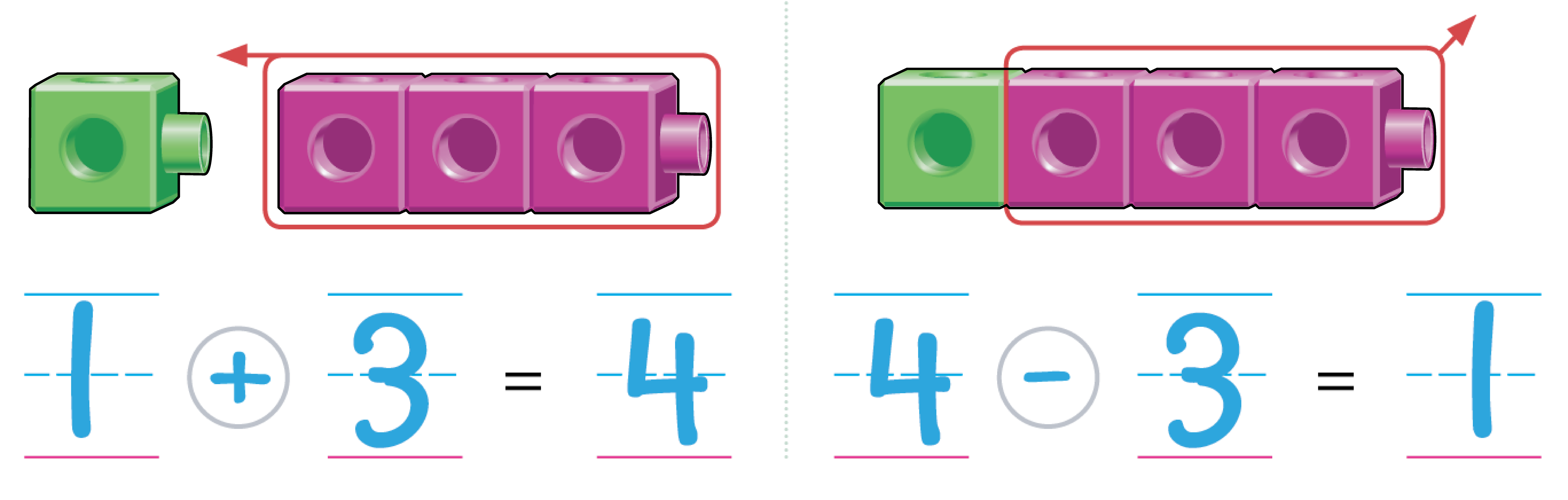
Related Facts Your child will solve related addition and subtraction facts. This lays the groundwork for future work involving an important relationship—called an inverse relationship—between addition and subtraction. Here is how your child would complete equations to show related facts.
Four penguins are in a group. One joins them. How many penguins are there in all?
Five penguins are in a group. One leaves. How many penguins are left?
Connecting cubes can be used to model related facts.
Add and Subtract Within 5 In this topic, there will be an opportunity to check where your child is with facts to 5. Your child will be asked to explain how sums and differences were found. Being able to use different strategies, such as drawing, will help your child develop fluency.
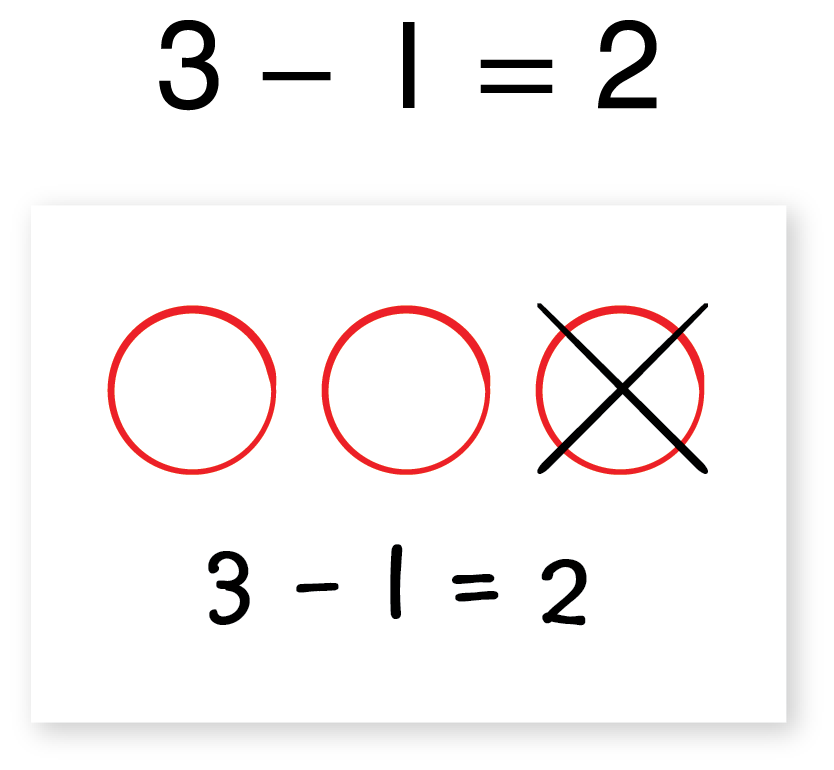
PARTS OF 10
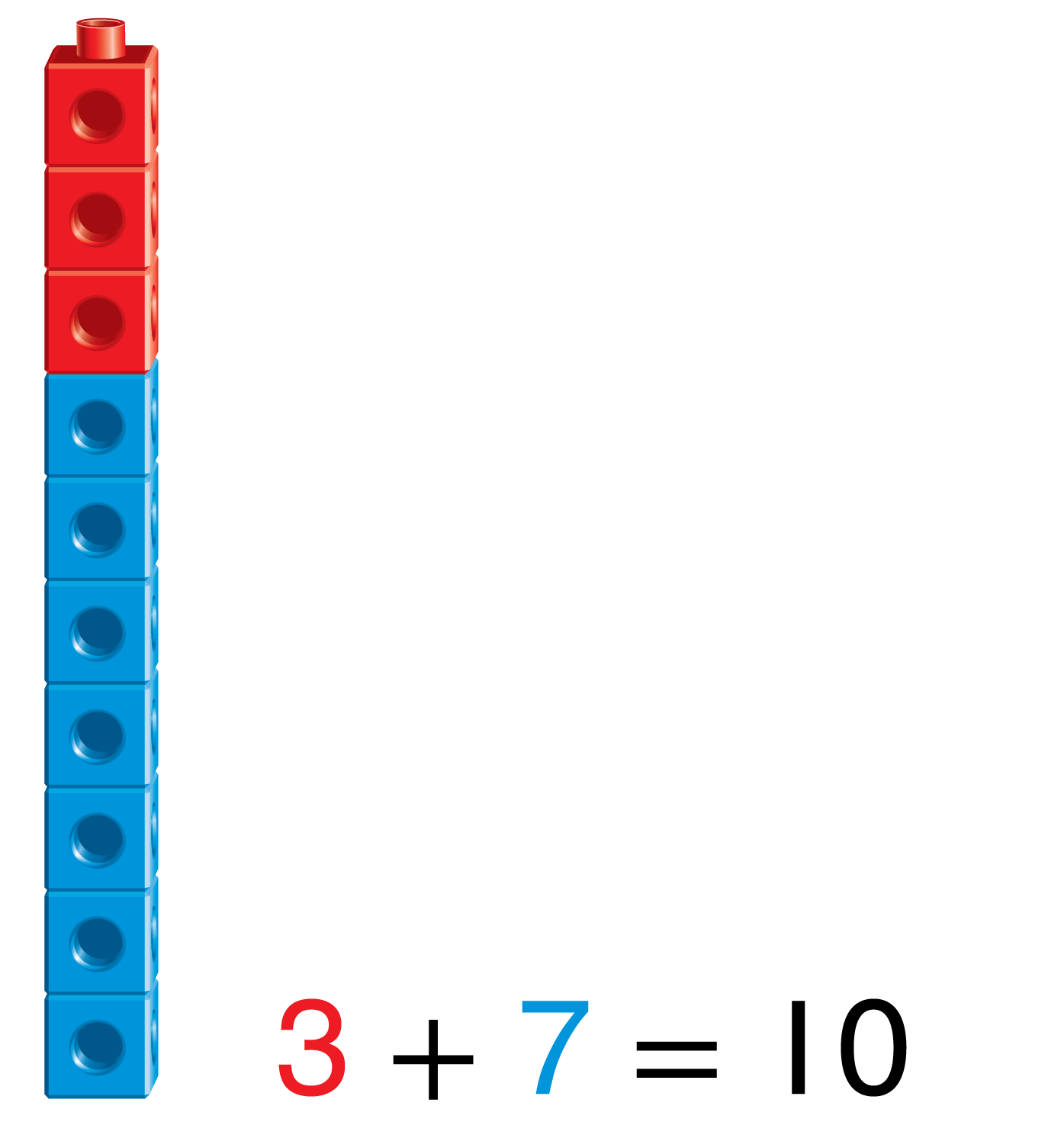
Missing Parts Your child will work on problems in which one part of 10 is given and the missing part must be found. Tools such as connecting cubes and ten-frames can be used. This understanding will help your child use the make-10 strategy to solve addition and subtraction problems in the future. Your child might use cubes to find a missing addend.
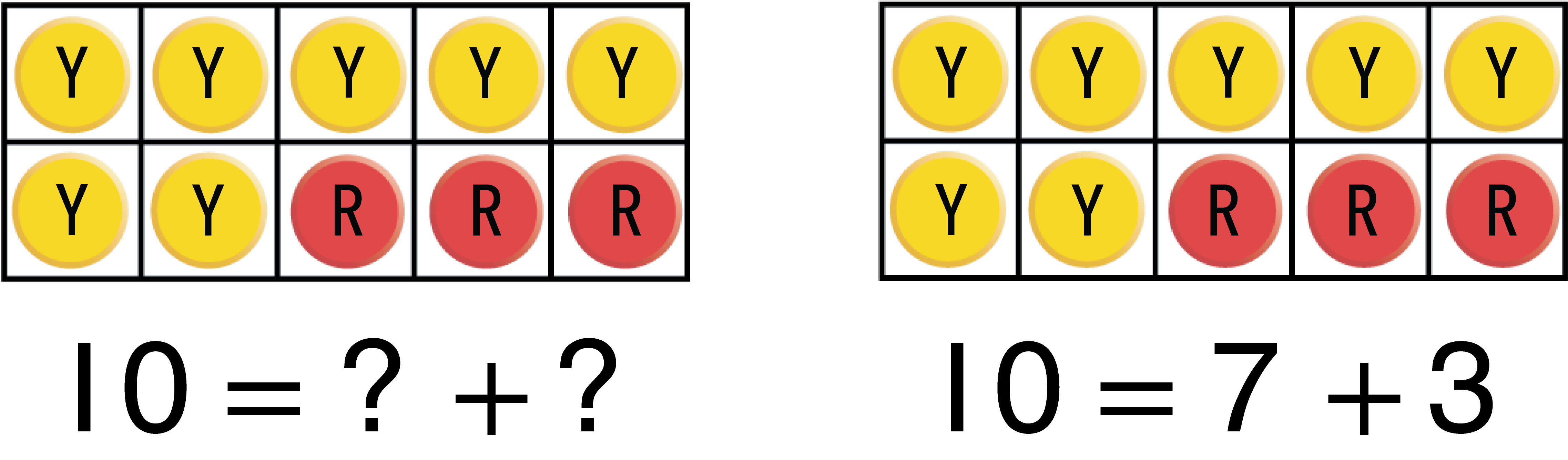
Here is how to use a ten-frame to find a missing addend.
CONNECT THE MATH
You can connect the math in this topic to everyday experiences. Play a missing addend game with your child as you do household tasks together. For example, as you put clean silverware in a drawer, you might say, “We washed 6 spoons, and you just put 2 in the drawer. How many still need to go in the drawer?” You can also have your child find parts of 10. Ask, “If there are 10 socks, how many could be black and how many could be white?”
Topic 6 Lessons
-
Lesson 6-1
-
Lesson 6-2
-
Lesson 6-3
-
Lesson 6-4
-
Lesson 6-5
-
Lesson 6-6
-
Lesson 6-7
-
Lesson 6-8
-
Lesson 6-9
-
Lesson 6-10
-
Lesson 6-11
-
Lesson 6-12