TOPIC 1
Count and Compare Numbers 0 to 5
OVERVIEW
Topic 1 focuses on extending your child’s understanding of counting and their ability to compare numbers from 0 to 5. The principles related to counting form an important foundation for all future math learning. Your child will count up to 5 objects in various arrangements, tell how many, and write the numeral. Your child will also compare groups of objects as well as the numbers that tell how many are in the groups. This work will deepen your child’s understanding of the concepts of greater than, less than, equal, and not equal.
COUNT QUANTITIES TO 5
Number Sequence and One-to-One Principle Your child will use the counting words in order (one, two, three, four, five) and learn to count objects by pairing them with one and only one number. Later in the topic, your child will learn about the quantity 0. Your child will count objects and color boxes to show how many.
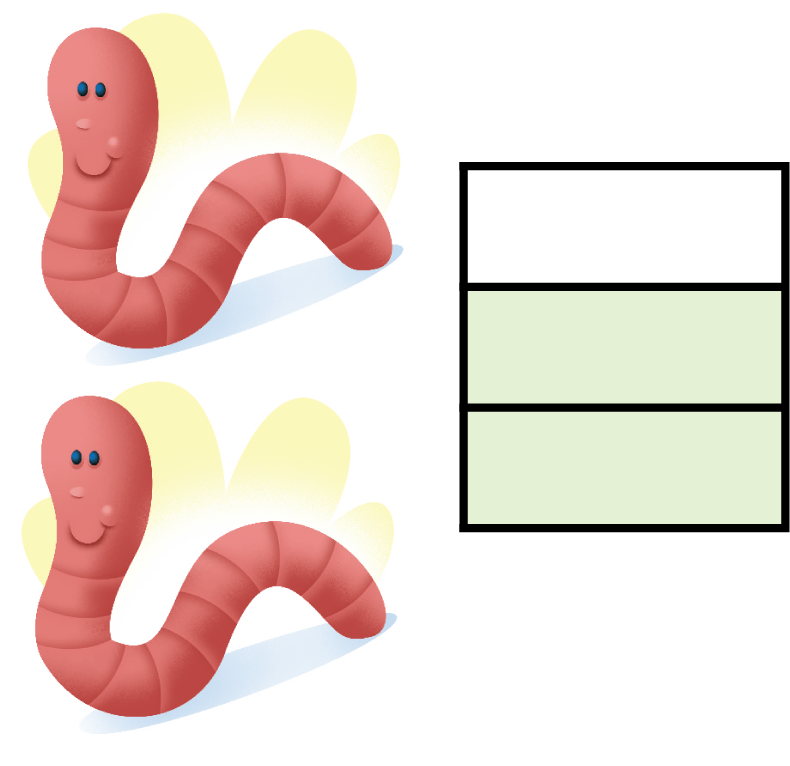
Cardinality of Groups of Objects Your child will learn that when counting a group of objects, the last number name they say tells how many objects are in the group, and the way the objects are arranged does not affect the number. Successive Numbers Your child will demonstrate that each number in a counting sequence represents one more than the quantity the previous number represents. For example, 5 represents one more than 4.
READ AND WRITE NUMERALS 0 TO 5
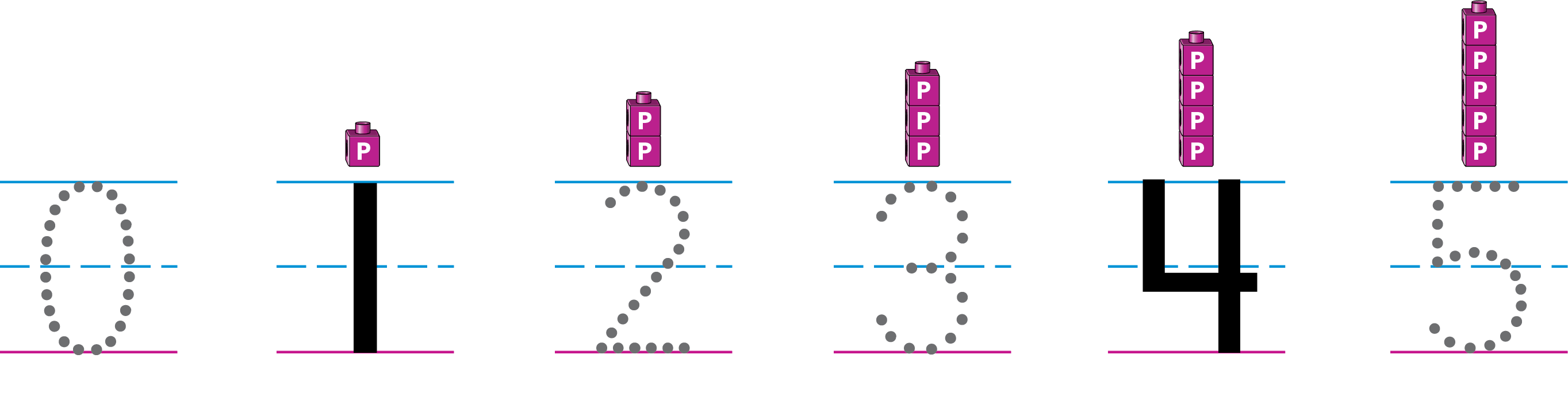
Your child will read numerals 1 to 5 and use tracing and dot prompts to write the numerals that tell how many objects are counted. Then your child will read the numeral 0 and write it to show the number of objects in a set with no objects.
EQUAL GROUPS
Your child will match objects in two groups to compare the groups and tell whether they are equal in number or not equal in number. They will draw a circle around groups that are equal in number and draw an X over groups that are not equal in number.
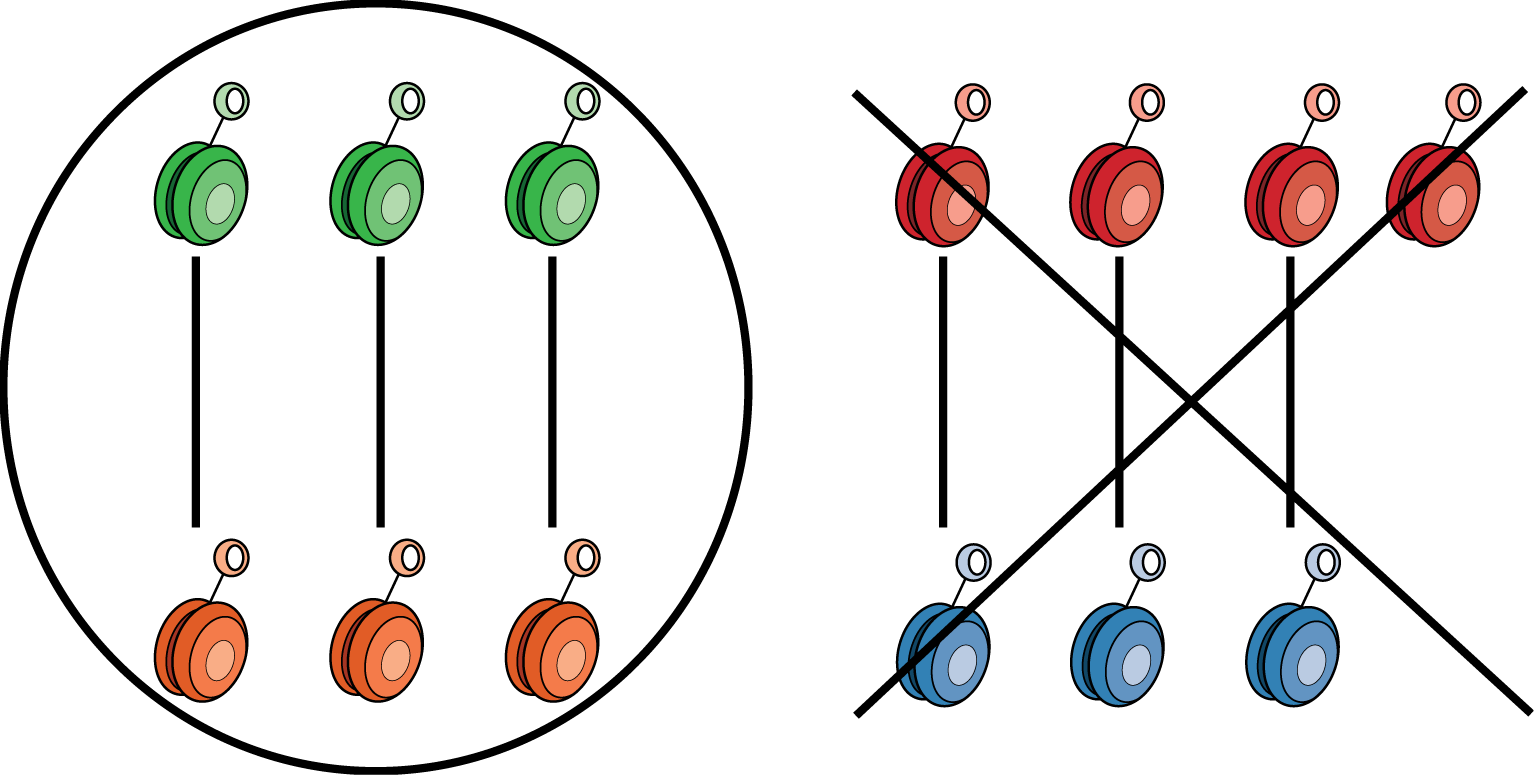 First set: a group of 3 green yo-yos and a group of 3 orange yo-yos. Lines match the 3 green and 3 orange yo-yos. A circle is drawn around the groups. Second set: a group of 4 red yo-yos and a group of 3 blue yo-yos. Lines match 3 of the 4 red yo-yos to the 3 blue yo-yos. An X is marked over both groups.
GREATER THAN AND LESS THAN
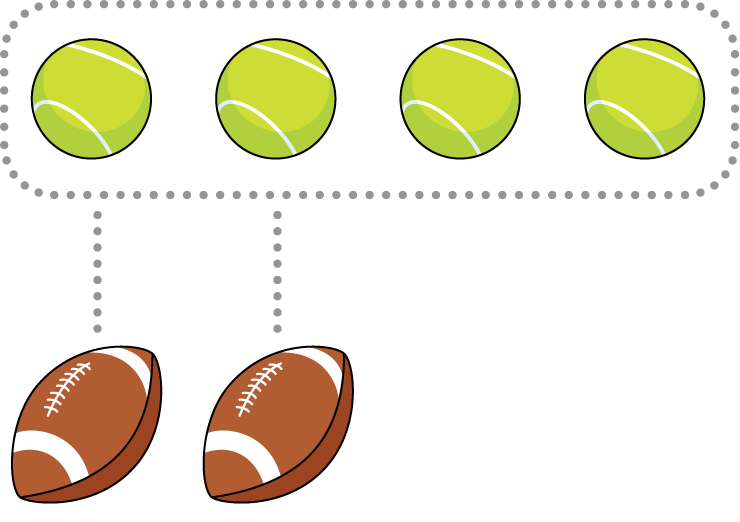
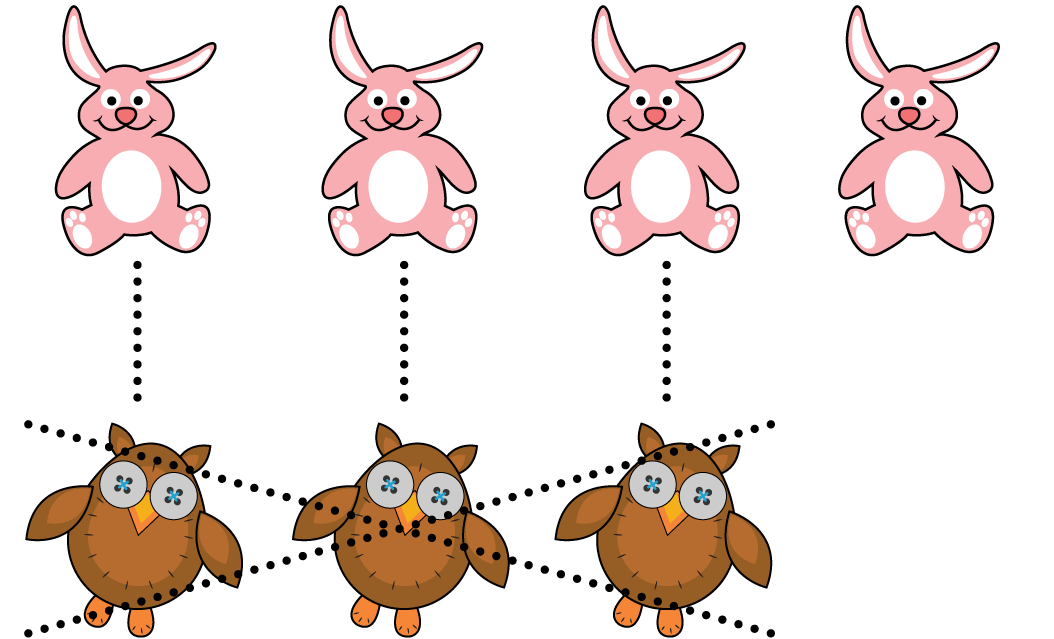
Your child will continue to use matching to determine which of two groups is either greater in number or less in number than the other group. Your child may explain that one group is greater than the other because it has at least one object left without a match. A group that is less in number than the other group would not have enough objects to match with the other group. Your child may also begin to reason about the magnitude of numbers, saying, for example, “I know 4 is greater than 3.” Your child will draw lines to match objects in two groups and then draw a circle around the group that is greater in number or an X over the group that is less in number than the other group.
COMPARE NUMBERS
Using the counting sequence, your child will compare groups of objects by their number. They may see that this is a more efficient method of comparing than matching objects one-to-one. Your child will count the number of objects in each group, write the numbers, and then draw a circle around the number that is greater than the other number and mark an X over the number that is less than the other number.
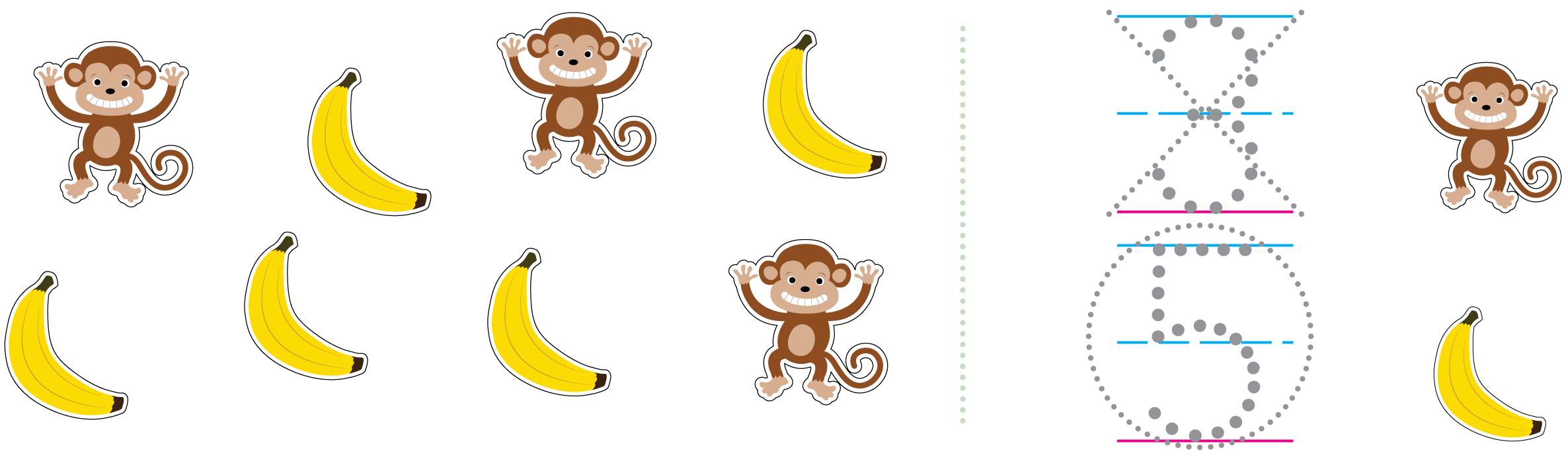 The number 3 is written next to a monkey. The number 5 is written next to a banana. The number 3 is marked with an X. The number 5 is circled.
CONNECT THE MATH
You can connect the math in this topic to everyday experiences. Have your child count and compare up to 5 objects around the house and when you are out. Ask your child about the number of spoons on the table, bananas in a bunch, or cans in your shopping cart. Include asking how many when there are no objects (the quantity 0). Help your child match objects in the groups to say which group is greater or less in number. Finally, have your child use ordinal numbers, such as “first” and “third,” to identify the position of items in a line.
Topic 1 Lessons
-
Lesson 1-1
-
Lesson 1-2
-
Lesson 1-3
-
Lesson 1-4
-
Lesson 1-5
-
Lesson 1-6
-
Lesson 1-7
-
Lesson 1-8
-
Lesson 1-9
-
Lesson 1-10
-
Lesson 1-11
-
Lesson 1-12
-
Lesson 1-13
-
Lesson 1-14